
Animal Directory Featured species in the planned Polar Ocean & Arctic Bay habitat
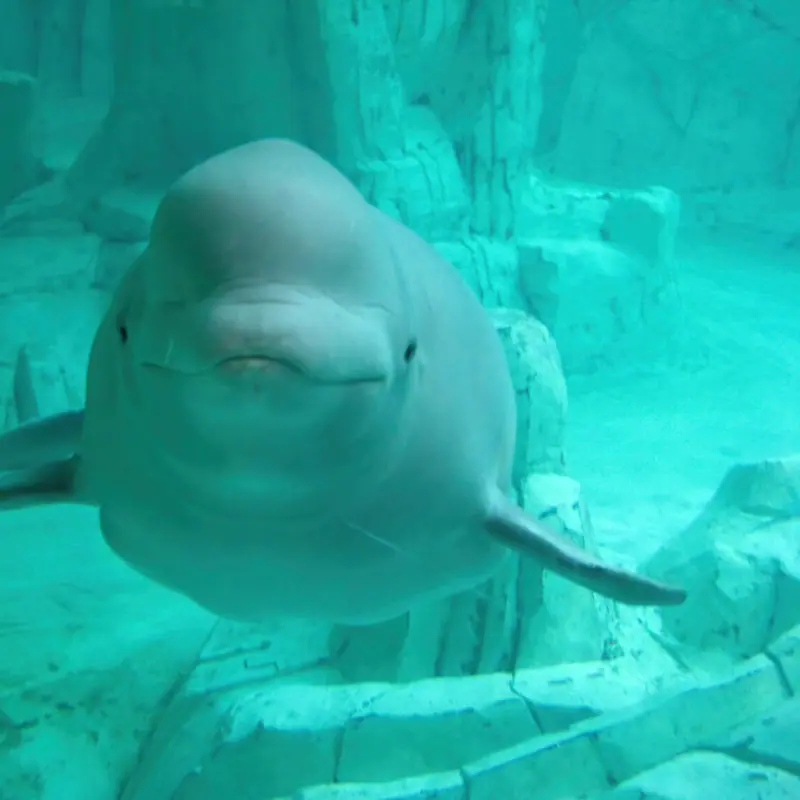
Photo: Carquinyol from Badalona, Catalunya CC BY-SA 2.0 Wikimedia Commons
Beluga Whale
Delphinapterus leucas
Young Explorer Notes
Three quick things to know about the Beluga Whale.
- Superpower
Nicknamed the "canary of the sea" — produces over 30 distinct vocalisations, including chirps, whistles, and clicks a…
- Home
Chilly pools and snowy shores for polar animals.
- How to help
Doing great in the wild!
Scientists say this species is safe for now. We still learn about them to keep it that way.
Fun facts for everyone
- Nicknamed the "canary of the sea" — produces over 30 distinct vocalisations, including chirps, whistles, and clicks audible above water.
- The only whale that can turn its head from side to side, thanks to unfused cervical vertebrae no other cetacean has.
- The bulbous forehead, called a "melon," is a flexible fatty lens used to focus echolocation clicks at prey.
- Lacks a dorsal fin — an Arctic adaptation that lets it swim under sea ice and conserve heat through less exposed surface area.
- IUCN lists the species as Least Concern globally, but the Cook Inlet subpopulation in Alaska is Critically Endangered with under 300 individuals.
From the master plan
The Beluga Whale is the planned Polar Ocean & Arctic Bay’s acoustic and visual centrepiece — viewed at the Beluga Lagoon both above and underwater, with hydrophones piping the whales’ clicks and whistles into the surrounding deck. The white silhouette against deep blue is the zone’s most-photographed moment.
IUCN status sourced from the Beluga Whale (Delphinapterus leucas) assessment (Lowry et al., 2017) on the IUCN Red List — listed as Least Concern with an unknown global trend; several subpopulations are assessed separately and individually at risk.
Find them in
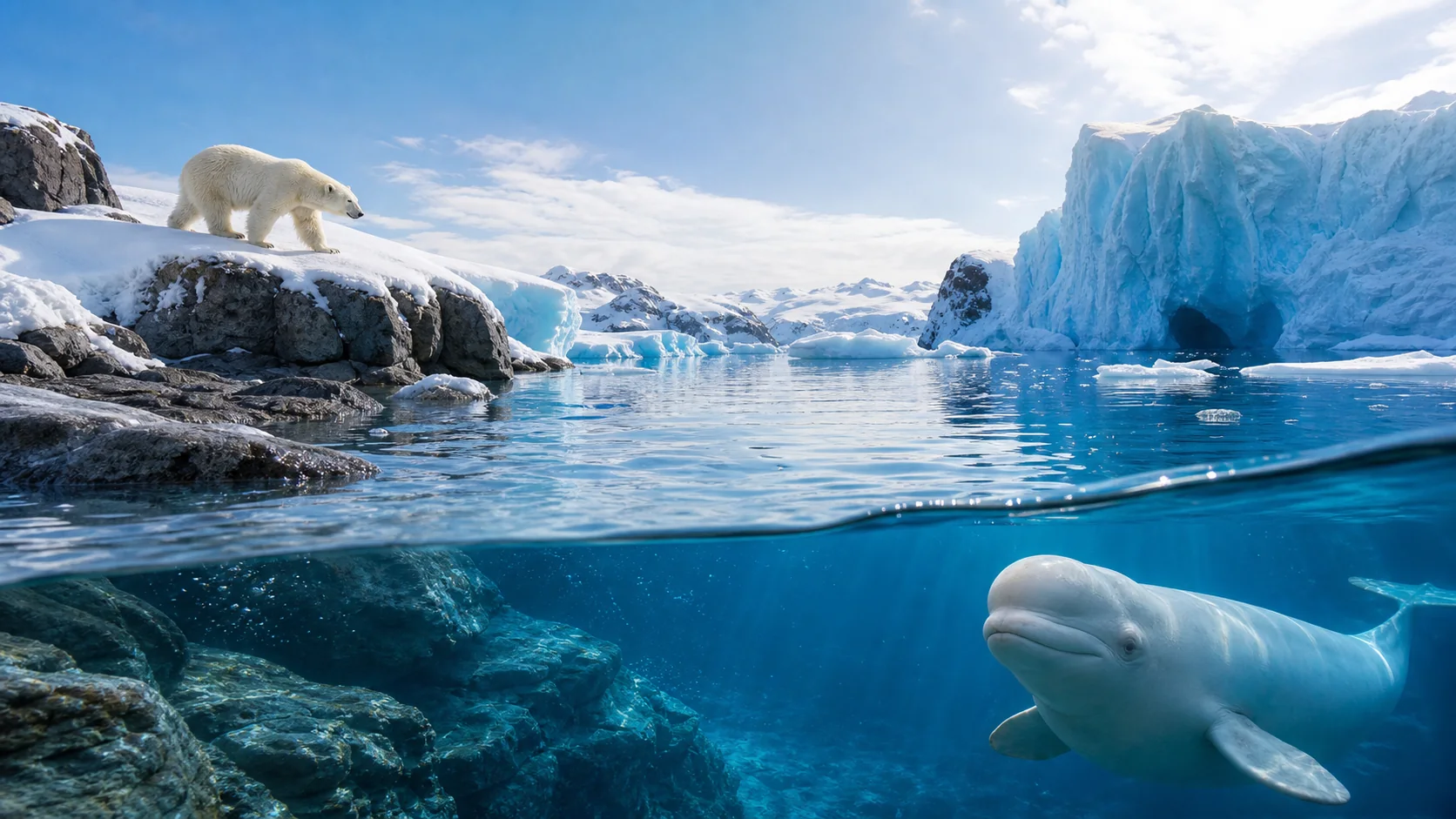
Polar Ocean & Arctic Bay
A world of ice, ocean and extraordinary adaptations
Visit Polar Ocean & Arctic Bay