
Animal Directory Featured species in the planned Polar Ocean & Arctic Bay habitat
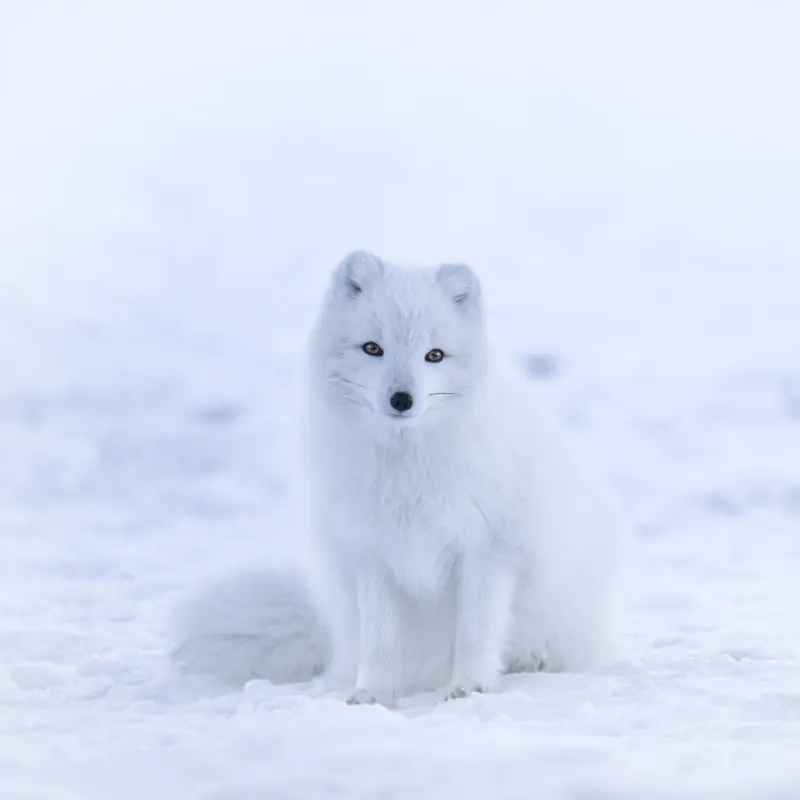
Photo: Jonathen Pie https://unsplash.com/@r3dmax CC0 Wikimedia Commons
Arctic Fox
Vulpes lagopus
Young Explorer Notes
Three quick things to know about the Arctic Fox.
- Superpower
Has the warmest pelt of any mammal — fur insulation kicks in only when ambient temperatures drop below -70 °C.
- Home
Chilly pools and snowy shores for polar animals.
- How to help
Doing great in the wild!
Scientists say this species is safe for now. We still learn about them to keep it that way.
Fun facts for everyone
- Has the warmest pelt of any mammal — fur insulation kicks in only when ambient temperatures drop below -70 °C.
- Changes coat twice a year — pure white in winter, brown-grey in summer — to stay camouflaged against snow and tundra.
- Tracks polar bears across pack ice for weeks at a time, scavenging the leftovers of seal kills.
- Can hear small mammals moving under a metre of snow and pounces vertically, headfirst, to break through and grab prey.
- IUCN lists the species as Least Concern globally, though the Scandinavian mainland subpopulation remains critically small after a 19th-century fur-trade collapse.
From the master plan
The Arctic Fox is the planned Polar Ocean & Arctic Bay’s terrestrial counterpoint to the marine megafauna — found at the Arctic Fox Post, themed around windswept tundra rock and lichen. The exhibit lands the zone’s secondary lesson: not every Arctic survivor is huge, and the smallest are often the most exquisitely adapted.
IUCN status sourced from the Arctic Fox (Vulpes lagopus) assessment (Angerbjörn & Tannerfeldt, 2014) on the IUCN Red List — listed as Least Concern with a stable global trend.
Find them in
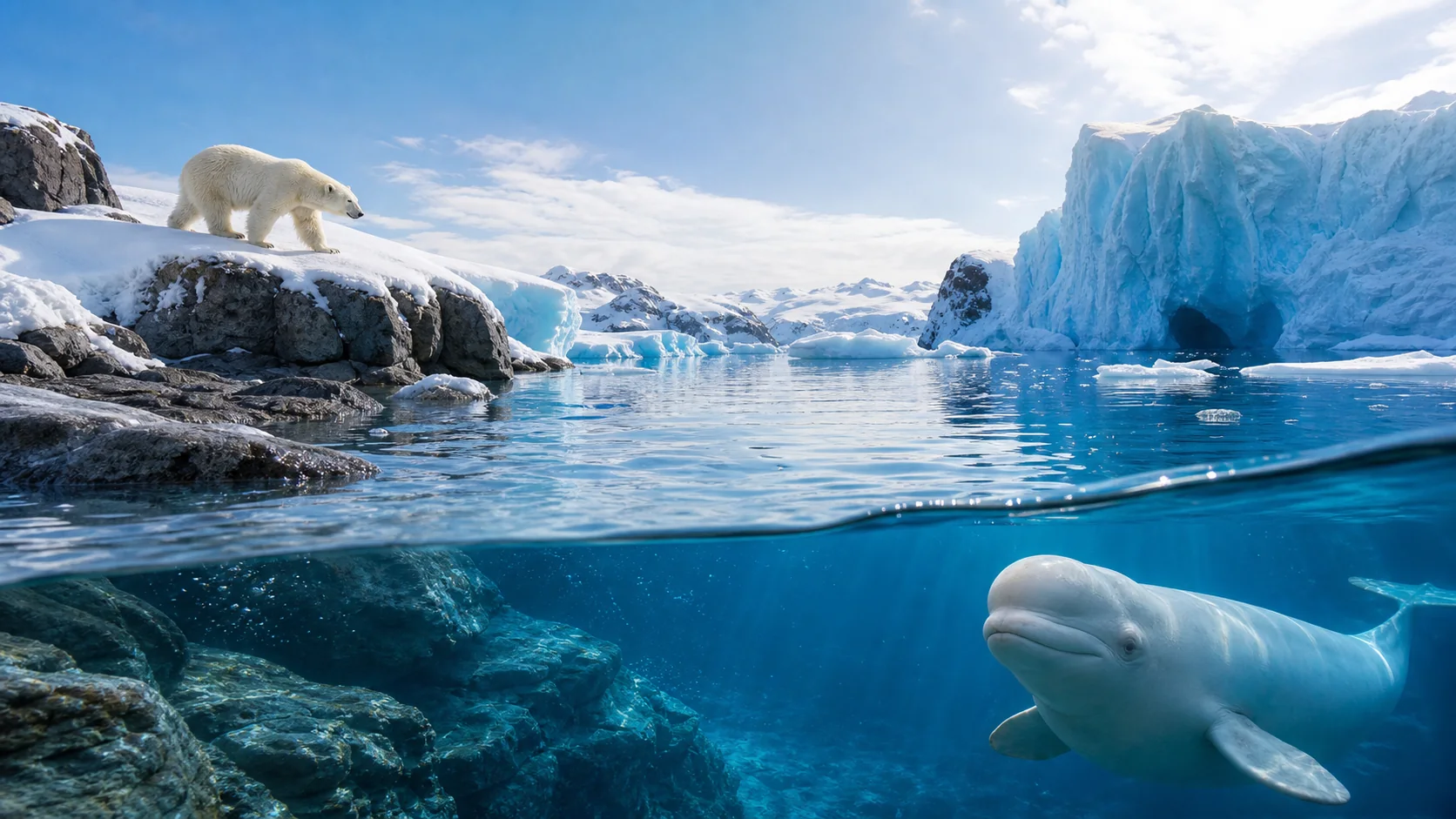
Polar Ocean & Arctic Bay
A world of ice, ocean and extraordinary adaptations
Visit Polar Ocean & Arctic Bay