
Animal Directory Featured species in the planned Tropical Rainforest Dome habitat
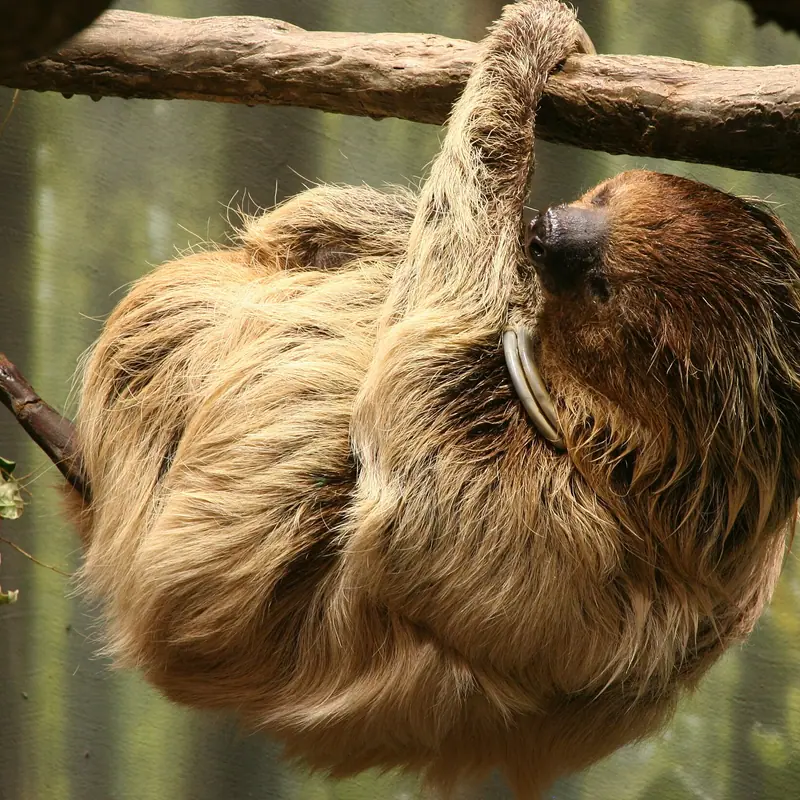
Photo: Dave Pape Public domain Wikimedia Commons
Linnaeus's Two-toed Sloth
Choloepus didactylus
Young Explorer Notes
Three quick things to know about the Linnaeus's Two-toed Sloth.
- Superpower
Spends almost its entire life upside down in the canopy; its organs are anchored to the rib cage so they don't press …
- Home
A warm, misty dome full of rain-forest plants and sounds.
- How to help
Doing great in the wild!
Scientists say this species is safe for now. We still learn about them to keep it that way.
Fun facts for everyone
- Spends almost its entire life upside down in the canopy; its organs are anchored to the rib cage so they don't press on the lungs.
- Moves so slowly that algae grow in grooves along its fur, giving it a green tint and camouflaging it from harpy eagles overhead.
- Comes down from the tree only about once a week to defecate at the base — a behaviour scientists are still puzzling over.
- Can rotate its head almost 270 degrees thanks to extra vertebrae in its neck, giving it a wide field of view without moving its body.
- IUCN lists the species as Least Concern with a stable population across northern South America.
From the master plan
The Two-toed Sloth occupies the planned Tropical Rainforest Dome’s mid-canopy, the Sloth Sanctuary marked on the zone map. Its role in the visit is deliberate counter-programming: after the macaws and the toucan blaze, the sloth offers a moment of complete stillness.
IUCN status sourced from the Linnaeus’s Two-toed Sloth (Choloepus didactylus) assessment (Moraes-Barros et al., 2014) on the IUCN Red List — listed as Least Concern with a stable population trend.
Find them in
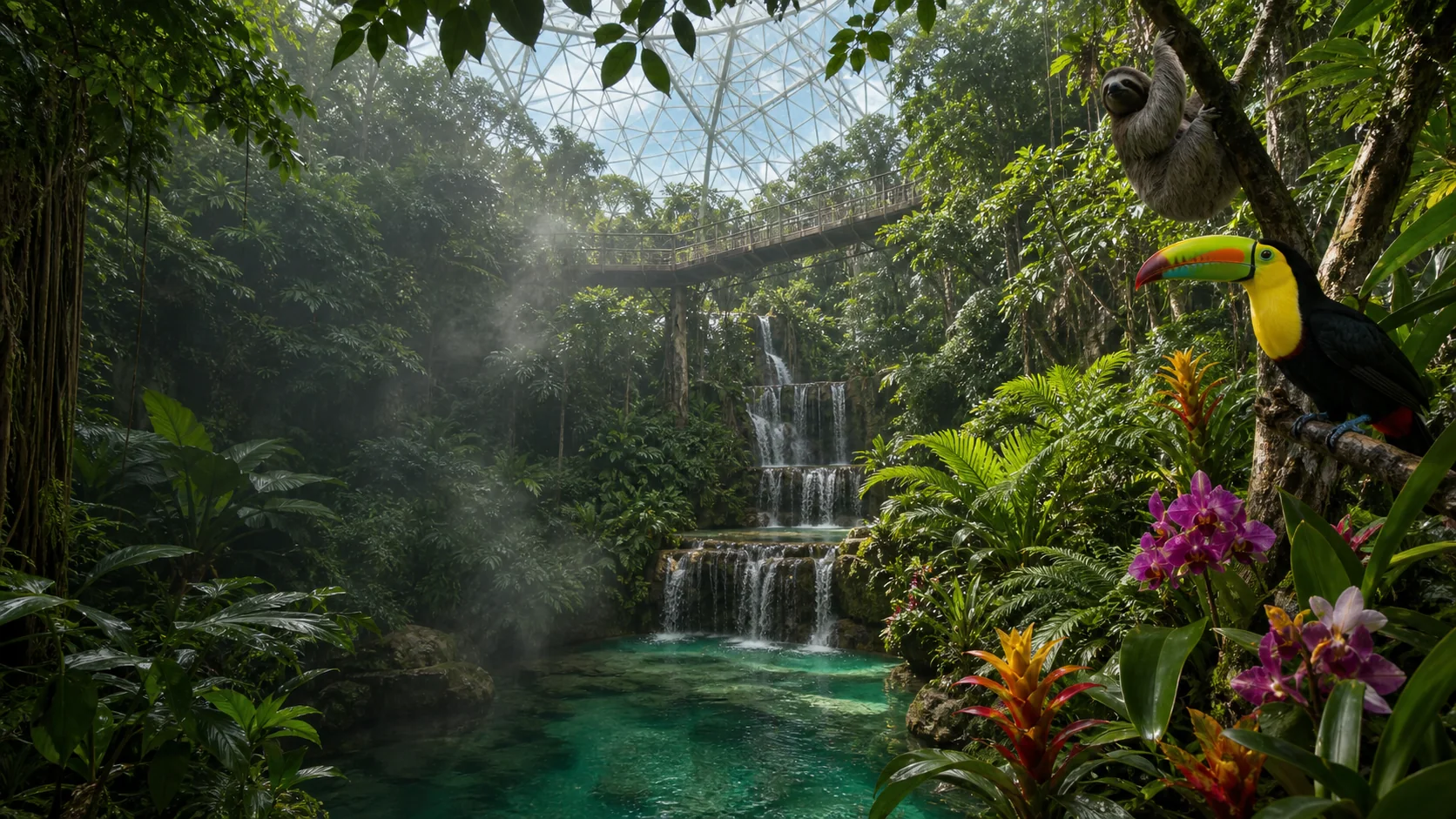
Tropical Rainforest Dome
A lush, all-weather escape into the heart of the rainforest
Visit Tropical Rainforest Dome