
Animal Directory Featured species in the planned Butterfly Garden habitat
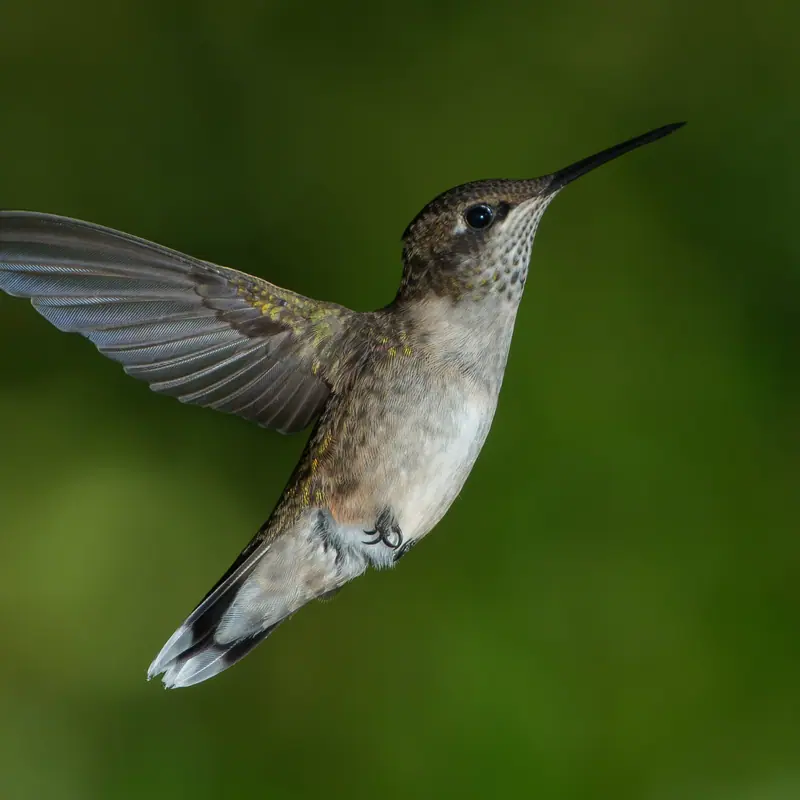
Photo: Pslawinski CC BY-SA 3.0 Wikimedia Commons
Ruby-throated Hummingbird
Archilochus colubris
Young Explorer Notes
Three quick things to know about the Ruby-throated Hummingbird.
- Superpower
Beats its wings around 53 times per second, producing the hum that gives the family its name and lets the bird hover …
- Home
A rainbow of flowers where butterflies dance.
- How to help
Doing great in the wild!
Scientists say this species is safe for now. We still learn about them to keep it that way.
Fun facts for everyone
- Beats its wings around 53 times per second, producing the hum that gives the family its name and lets the bird hover with precision in any direction.
- Crosses the Gulf of Mexico in a single 800 km non-stop flight, fuelled by body fat that nearly doubles its weight before departure.
- Heart rate spikes above 1,200 beats per minute in flight, then drops to 50 in nightly torpor to save energy.
- Visits hundreds of flowers a day; the male's iridescent throat patch ("gorget") flashes ruby only at certain angles to the sun.
- The only hummingbird that breeds widely east of the Mississippi — a continent-scale pollinator that shares feeding routes with monarchs and bumblebees.
From the master plan
The Ruby-throated Hummingbird is the vertebrate pollinator of the Butterfly Garden — paired with the trumpet-vine wall and nectar feeders along the garden’s south path. It belongs in this zone (not the Aviary) because the design story is pollination, not free flight.
IUCN Red List lists Archilochus colubris as Least Concern with an increasing population trend (BirdLife International, 2018).
Find them in

Butterfly Garden
A delicate, colorful sanctuary for pollinators, flowers, and gentle discovery
Visit Butterfly Garden