
Animal Directory Featured species in the planned Asian Highlands habitat
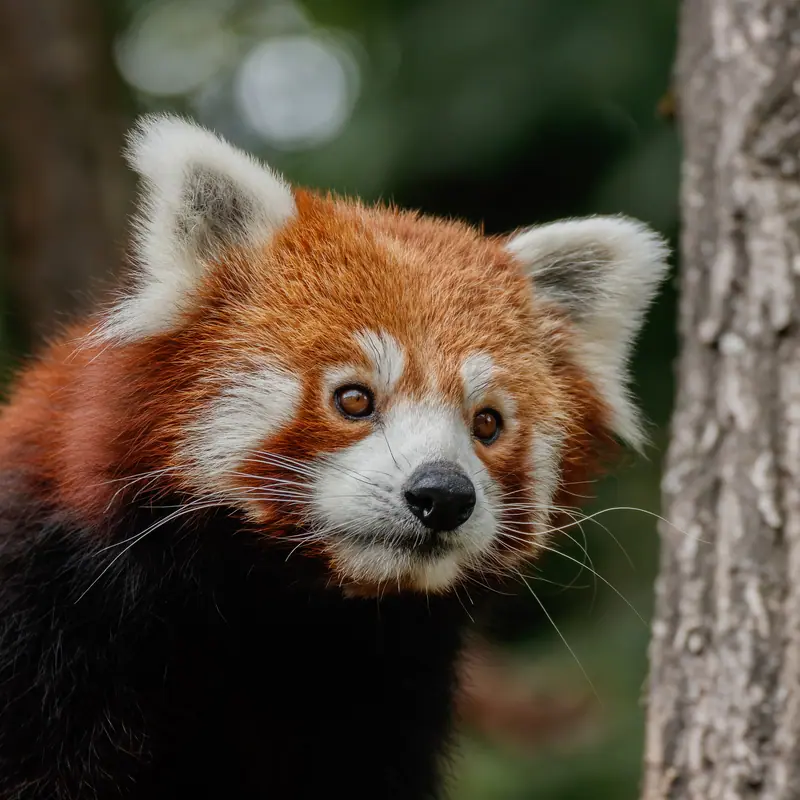
Photo: H. Zell CC BY-SA 3.0 Wikimedia Commons
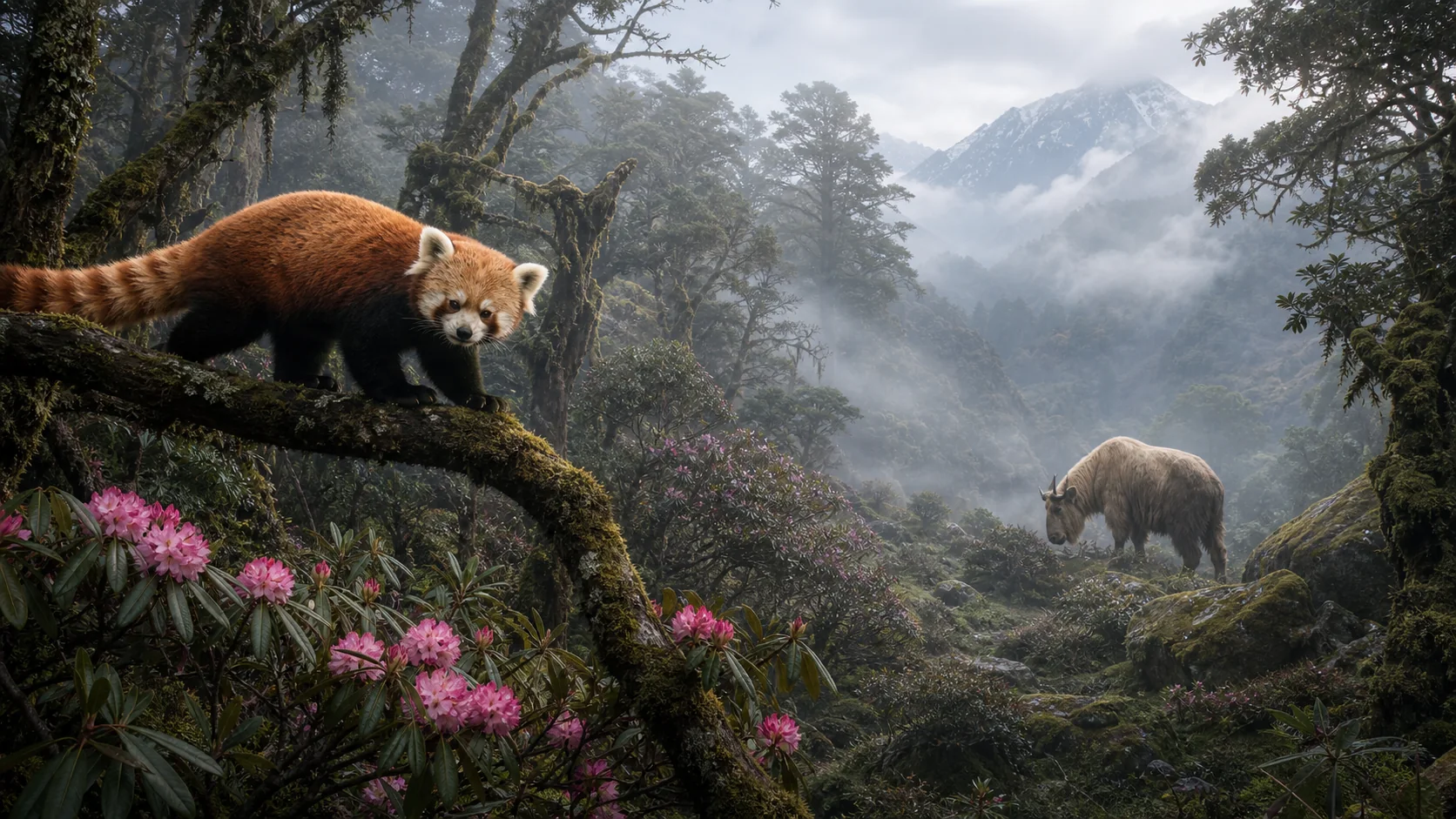
Red Panda
Ailurus fulgens
Young Explorer Notes
Three quick things to know about the Red Panda.
- Superpower
Not closely related to the Giant Panda — the Red Panda is the sole living member of its own family, Ailuridae, and wa…
- Home
Mountain paths, mist, and highland meadows.
- How to help
Endangered — heroes needed!
Zoos and conservation teams work together to save endangered animals and their habitats.
Fun facts for everyone
- Not closely related to the Giant Panda — the Red Panda is the sole living member of its own family, Ailuridae, and was actually described by Western science 48 years earlier.
- Uses a "false thumb" (an enlarged wrist bone) to grip bamboo, an example of convergent evolution with the Giant Panda's identical adaptation.
- The bushy, ringed tail is roughly as long as the body and doubles as a counterbalance on tree limbs and a wraparound blanket against cold Himalayan nights.
- Largely solitary and crepuscular, peaking in activity at dawn and dusk when the Asian Highlands canopy walk is quietest.
- IUCN lists the species as **Endangered**, with fewer than 10,000 mature individuals in the wild and an ongoing decline driven by habitat fragmentation.
From the master plan
The Red Panda anchors the Red Panda Treetop Walk at the upper end of the Asian Highlands. The elevated boardwalk threads through cool, mossy temperate forest — replicating the eastern-Himalayan understory the species needs to climb, forage, and den safely above ground.
IUCN status sourced from the Red Panda assessment (Glatston et al., 2015) on the IUCN Red List —
Ailurus fulgenslisted as Endangered with a decreasing population trend.
Find them in