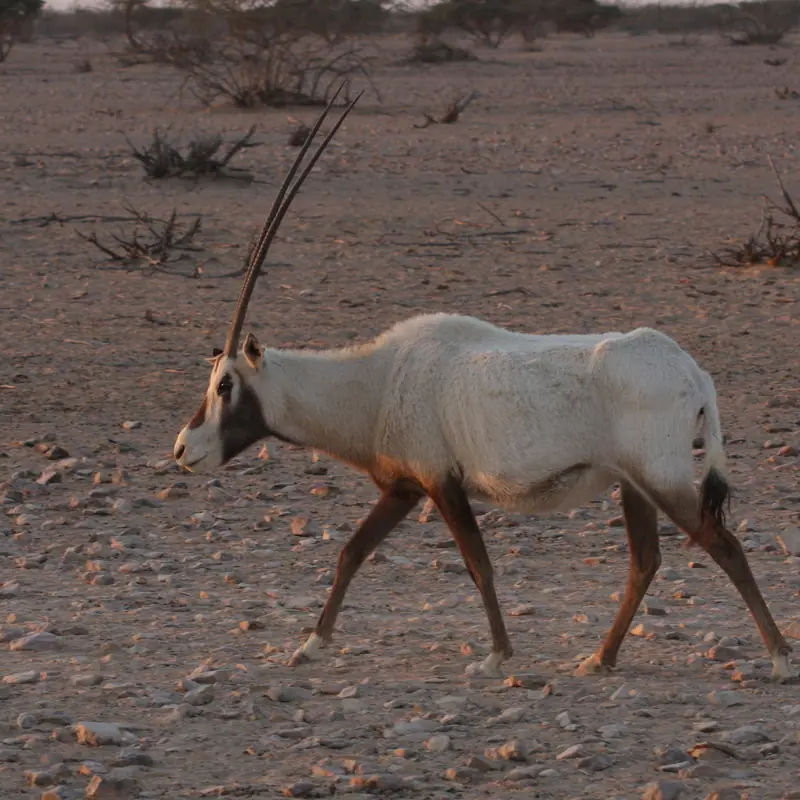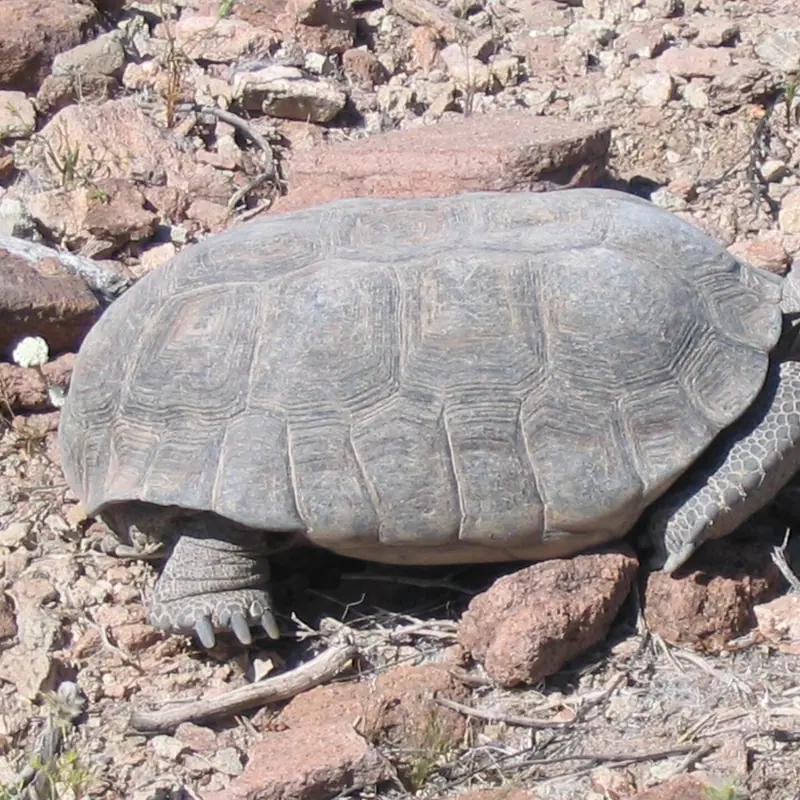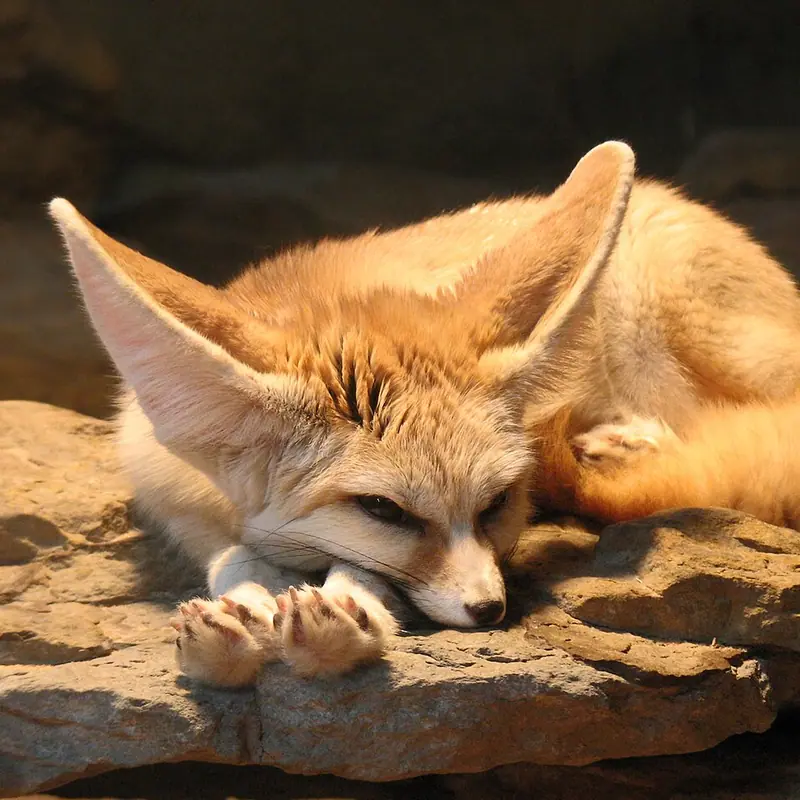

Animal Directory Featured species in the planned Desert Trails habitat
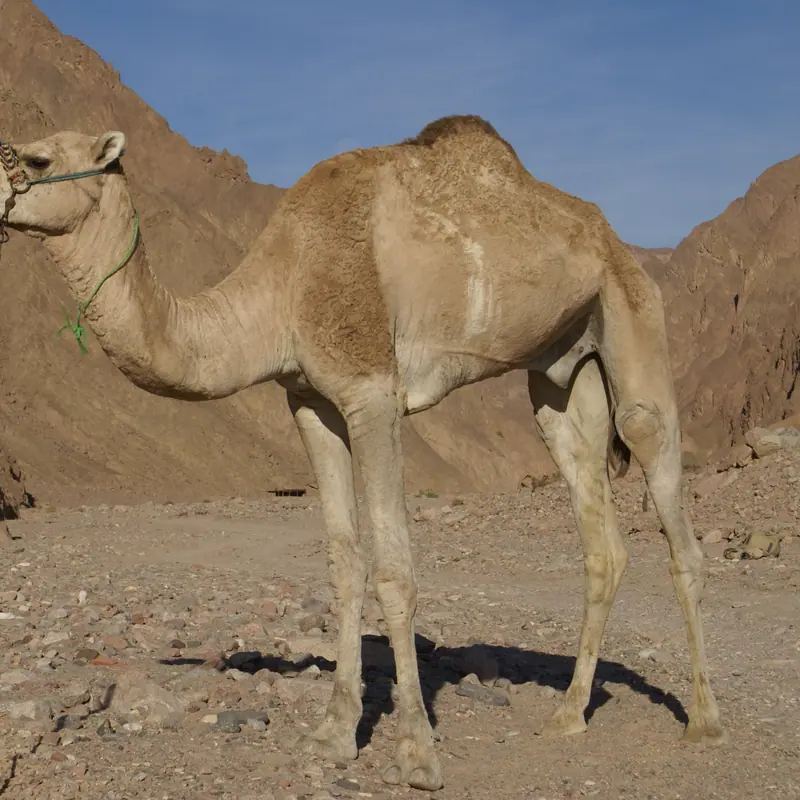
Photo: Florian Prischl CC BY-SA 3.0 Wikimedia Commons
Dromedary Camel
Camelus dromedarius
Young Explorer Notes
Three quick things to know about the Dromedary Camel.
- Superpower
The single hump is not a water store but a fat reserve — up to 36 kg of it, which the camel metabolises into both ene…
- Home
Sandy paths, cacti, and desert sun (with plenty of shade).
- How to help
Doing great in the wild!
Scientists say this species is safe for now. We still learn about them to keep it that way.
Fun facts for everyone
- The single hump is not a water store but a fat reserve — up to 36 kg of it, which the camel metabolises into both energy and metabolic water during long dry crossings.
- Can drink 100+ litres of water in 10 minutes after a dry stretch — the red blood cells are oval-shaped and elastic, letting them swell and shrink dramatically without bursting.
- Loses surprisingly little water through breathing thanks to specialised nasal passages that recapture moisture from exhaled air, and a body temperature that swings 6 °C between night and day to avoid sweating.
- Three eyelids per eye and two rows of long lashes keep blowing desert sand out; nostrils can close completely against a sandstorm.
- True wild dromedaries have been extinct for ~2000 years; today's population (~15 million working camels and the world's largest feral herd of ~1 million in Australia) is **Least Concern**.
From the master plan
The Dromedary Camel anchors the Camel Caravan Stop at the eastern entrance to Desert Trails. The exhibit recreates a Silk-Road-era staging point — shade sails, watering trough, packed-earth corral — and frames the camel as the desert’s original logistics partner, not just a charismatic resident.
IUCN status:
Camelus dromedariusis treated as Least Concern given that ~15 million domesticated and feral animals exist worldwide. The truly wild form of the species is long extinct; what remains is the working/feral dromedary, well above any conservation threshold.
Find them in
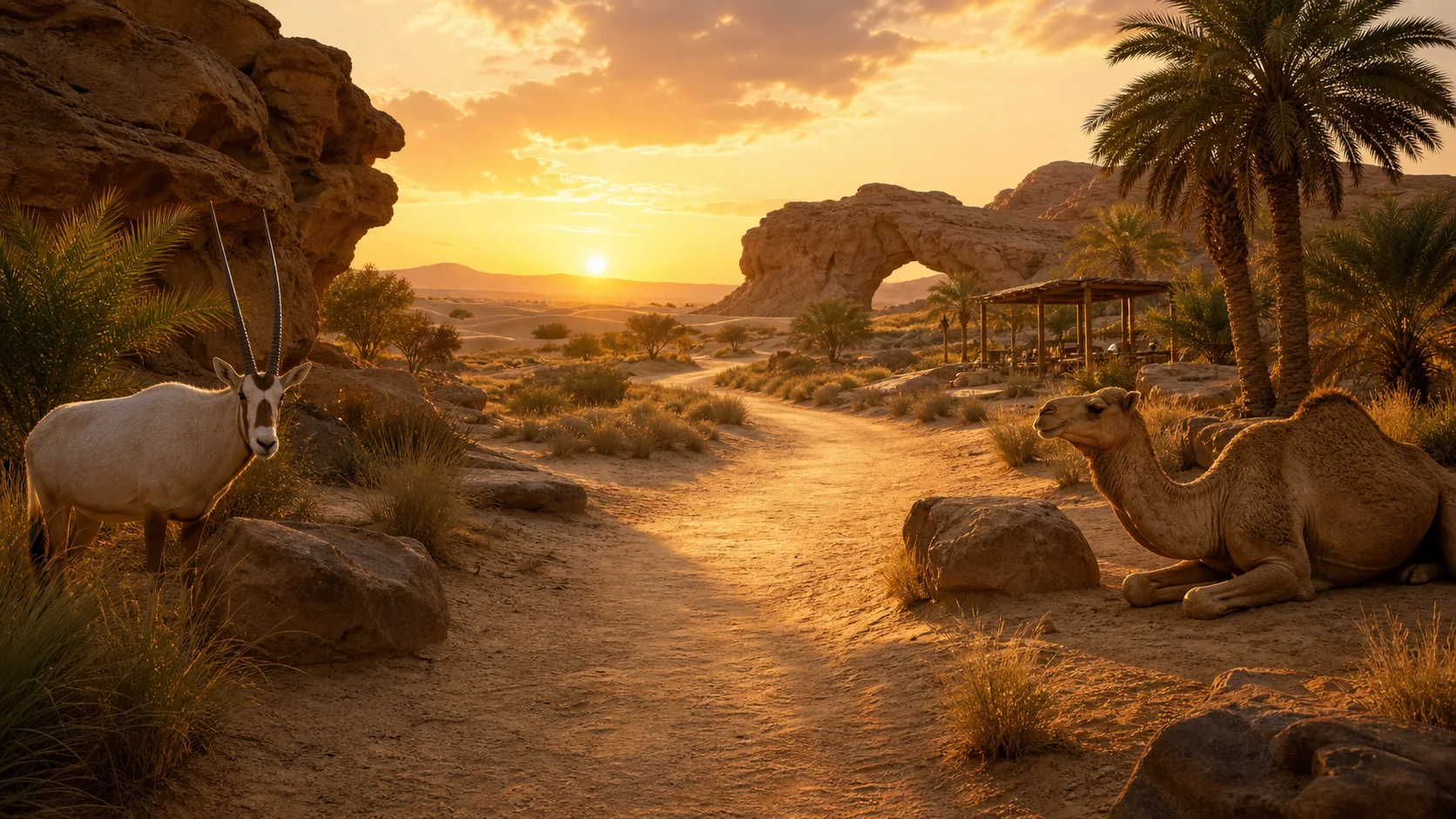
Desert Trails
A sun-baked journey through dunes, canyons and resilient desert life
Visit Desert Trails