
Animal Directory Featured species in the planned Australian Outback habitat
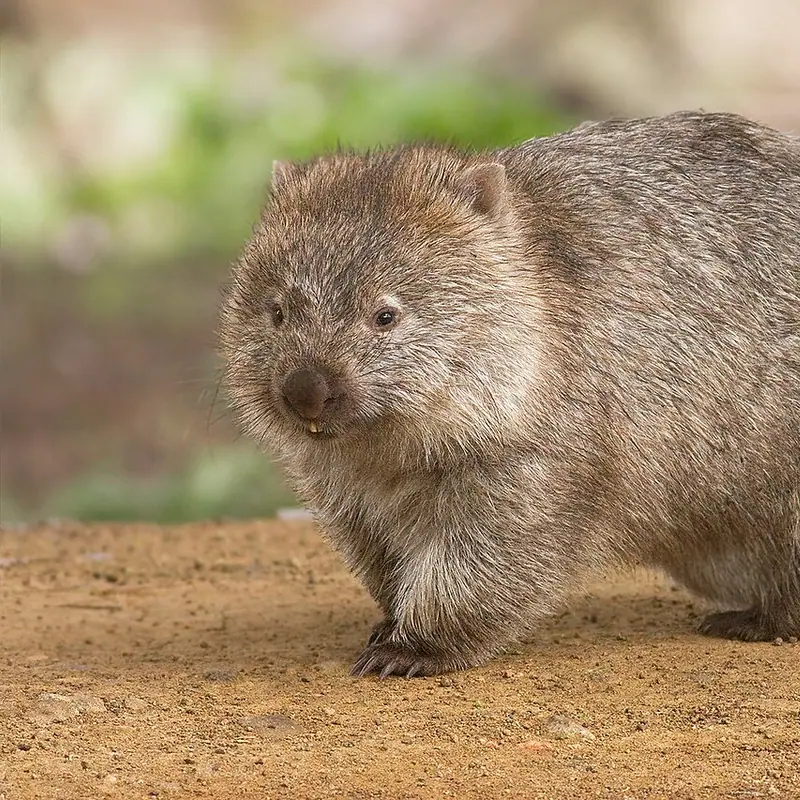
Photo: JJ Harrison ( jjharrison89@facebook.com ) CC BY-SA 3.0 Wikimedia Commons
Common Wombat
Vombatus ursinus
Young Explorer Notes
Three quick things to know about the Common Wombat.
- Superpower
Produces **cube-shaped droppings** — the only known animal to do so.
- Home
Red earth, open bush, and sunny Australian trails.
- How to help
Doing great in the wild!
Scientists say this species is safe for now. We still learn about them to keep it that way.
Fun facts for everyone
- Produces **cube-shaped droppings** — the only known animal to do so. The shape comes from the elastic rhythm of the wombat's intestinal wall and may help the scat stay put on rocks it uses to mark territory.
- Digs burrow systems up to 30 m long with multiple chambers; the entrance is built backwards-pouch-friendly so dirt doesn't fall on the joey.
- Has a backwards-facing pouch, an evolutionary leftover from a digging lifestyle — keeps soil from filling the pouch while excavating.
- Possesses a cartilage-reinforced rump used to block tunnel entrances and to crush predators against the burrow ceiling.
- IUCN listed as **Least Concern**; populations are stable across south-eastern Australia and Tasmania.
From the master plan
The Common Wombat is featured at the Wombat Burrow habitat near the centre of Australian Outback. The exhibit cuts the burrow open with a glass cross- section, letting guests watch the wombat’s underground architecture in action — particularly active during the cooler dusk hours guests visit.
IUCN status sourced from the Common Wombat assessment (Taggart & Robinson, 2016) on the IUCN Red List —
Vombatus ursinuslisted as Least Concern.
Find them in