
Animal Directory Featured species in the planned Aviary habitat
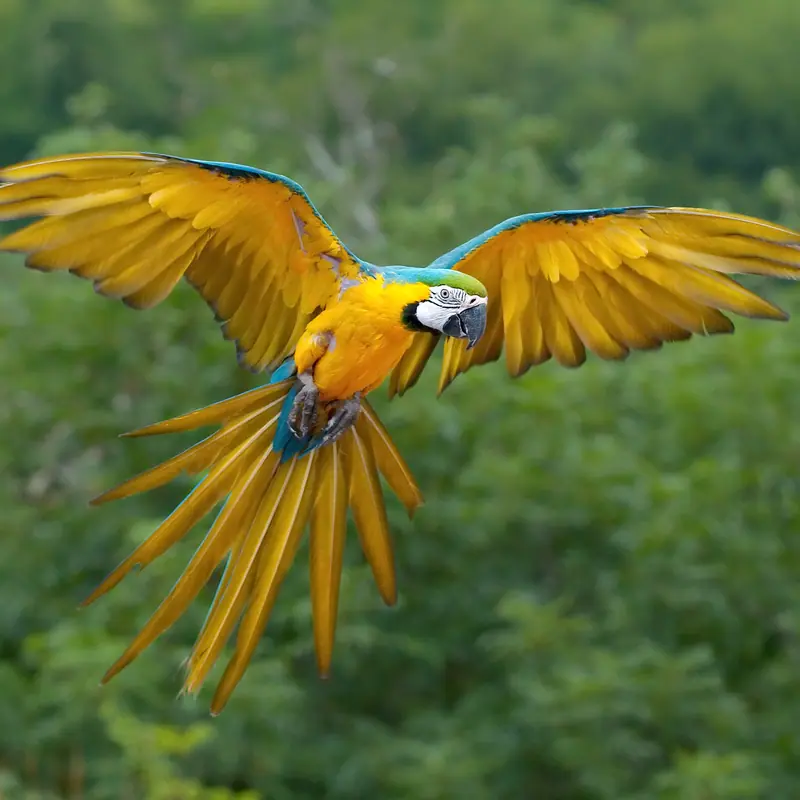
Photo: Luc Viatour CC BY 2.0 Wikimedia Commons
Blue-and-yellow Macaw
Ara ararauna
Young Explorer Notes
Three quick things to know about the Blue-and-yellow Macaw.
- Superpower
Bright turquoise above, golden-yellow below, with a white face that crinkles with tiny black "stitching" feathers uni…
- Home
Tall aviaries filled with birdsong and flight.
- How to help
Doing great in the wild!
Scientists say this species is safe for now. We still learn about them to keep it that way.
Fun facts for everyone
- Bright turquoise above, golden-yellow below, with a white face that crinkles with tiny black "stitching" feathers unique to each individual.
- Among the longest-lived parrots — wild birds reach 30 years, and zoo-housed individuals routinely pass 50.
- Voice carries up to 5 km through dense Amazonian canopy — the contact call is one of the loudest in the parrot family.
- Mates form a tight social unit even within flocks, often preening each other and sharing food beak-to-beak.
- Once locally extinct in Trinidad, the species was successfully reintroduced from Guyanese stock in the 1990s — a model conservation translocation.
From the master plan
The Blue-and-yellow Macaw is the colour counterpoint to the scarlet in the free-flight dome. The pairing is deliberate: guests see two of the world’s most brilliant species sharing the same airspace, the way they often do in the wild canopy of Amazonia.
IUCN Red List lists Ara ararauna as Least Concern (BirdLife International, 2018).
Find them in
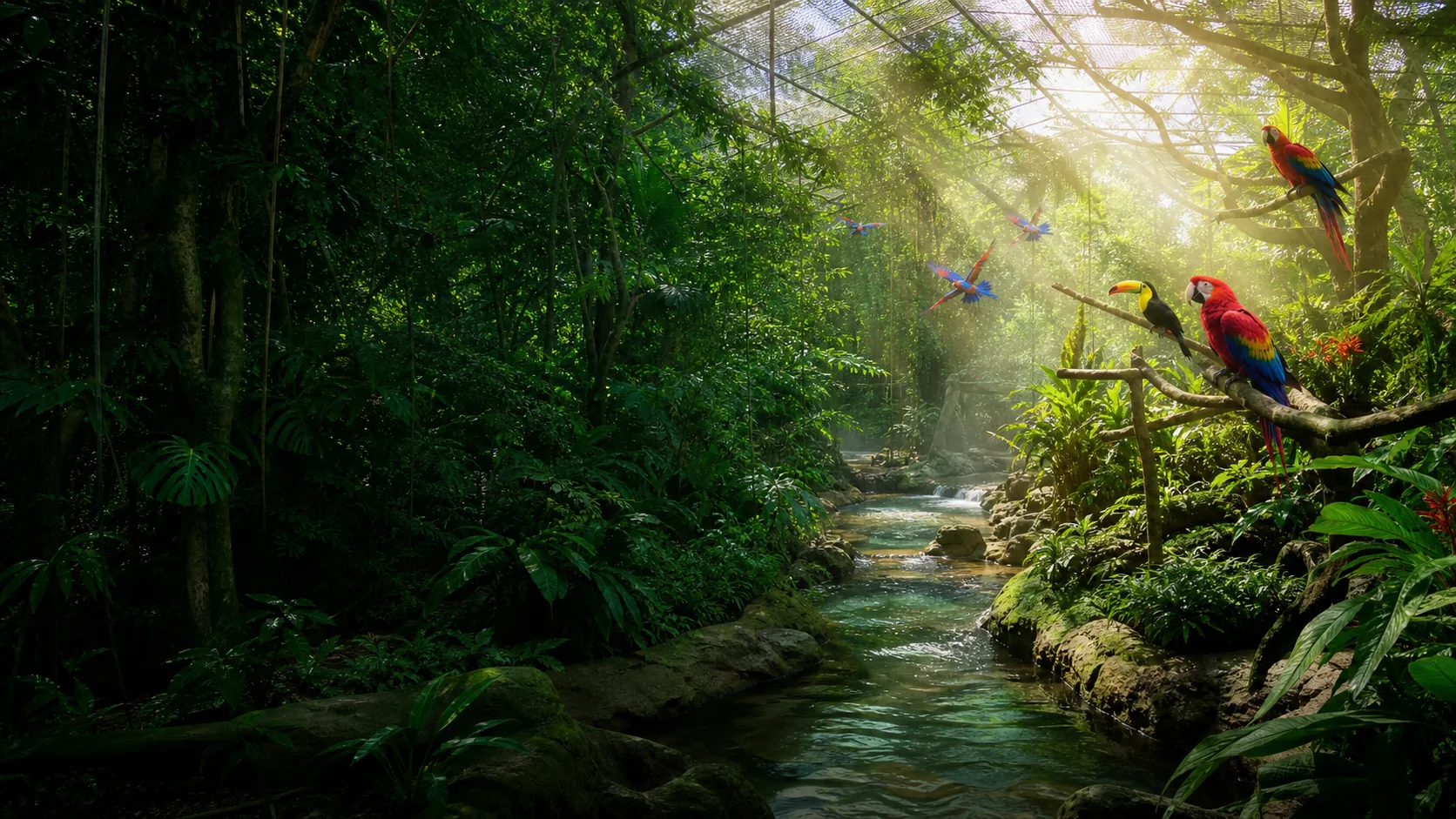
Aviary
A colorful free-flight habitat full of sound, motion, and tropical light
Visit Aviary