
Animal Directory Featured species in the planned Big Cat Canyon habitat
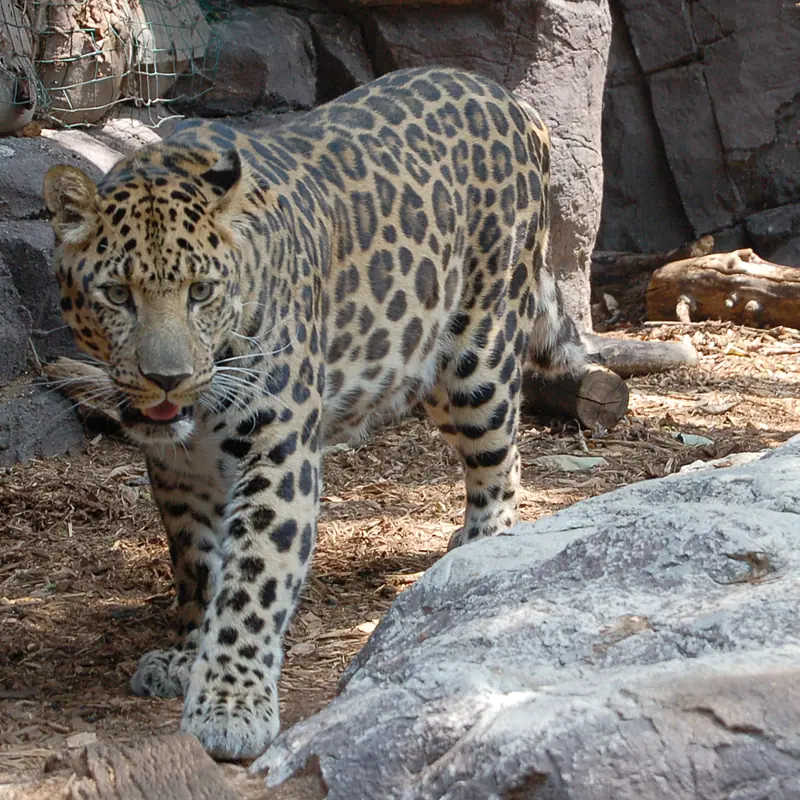
Photo: Photo by Derek Ramsey ( Ram-Man ) CC BY-SA 2.5 Wikimedia Commons
Amur Leopard
Panthera pardus orientalis
Young Explorer Notes
Three quick things to know about the Amur Leopard.
- Superpower
One of the rarest big cats on Earth — recent estimates put the wild Russian Far East population at fewer than 130 adu…
- Home
Rocky cliffs and shady trails where big cats prowl.
- How to help
Critically endangered
Very few are left in the wild. Every rescue and breeding program matters.
Fun facts for everyone
- One of the rarest big cats on Earth — recent estimates put the wild Russian Far East population at fewer than 130 adults, with a small additional population over the border in China.
- The northernmost-living leopard, adapted to deep snow with a coat up to 7 cm long in winter, paler and more golden than the African leopard.
- Amur leopards have unusually long legs for a leopard — an adaptation for moving through snow and over rough Manchurian-mountain terrain.
- Like all leopards they cache kills in trees, but the Amur subspecies is famous for hauling deer carcasses several metres up oak limbs in subzero cold to keep them away from tigers.
- The "Leopard Lounge" rocky outcrop on the deck's Zone 3 map is sized and faced to mimic the basalt cliffs of Land of the Leopard National Park, the species' last wild stronghold.
From the master plan
The Amur Leopard occupies the rocky upper terraces of Big Cat Canyon. The viewing angle is deliberately low — guests look up at the leopard on basalt-coloured rockwork — playing to the species’ habit of resting on cliff ledges and dragging kills into elevated cache trees.
IUCN status sourced from the Amur Leopard (Panthera pardus ssp. orientalis) assessment (Stein et al., 2024) on the IUCN Red List — listed as Critically Endangered with a continuing population decline.
Find them in
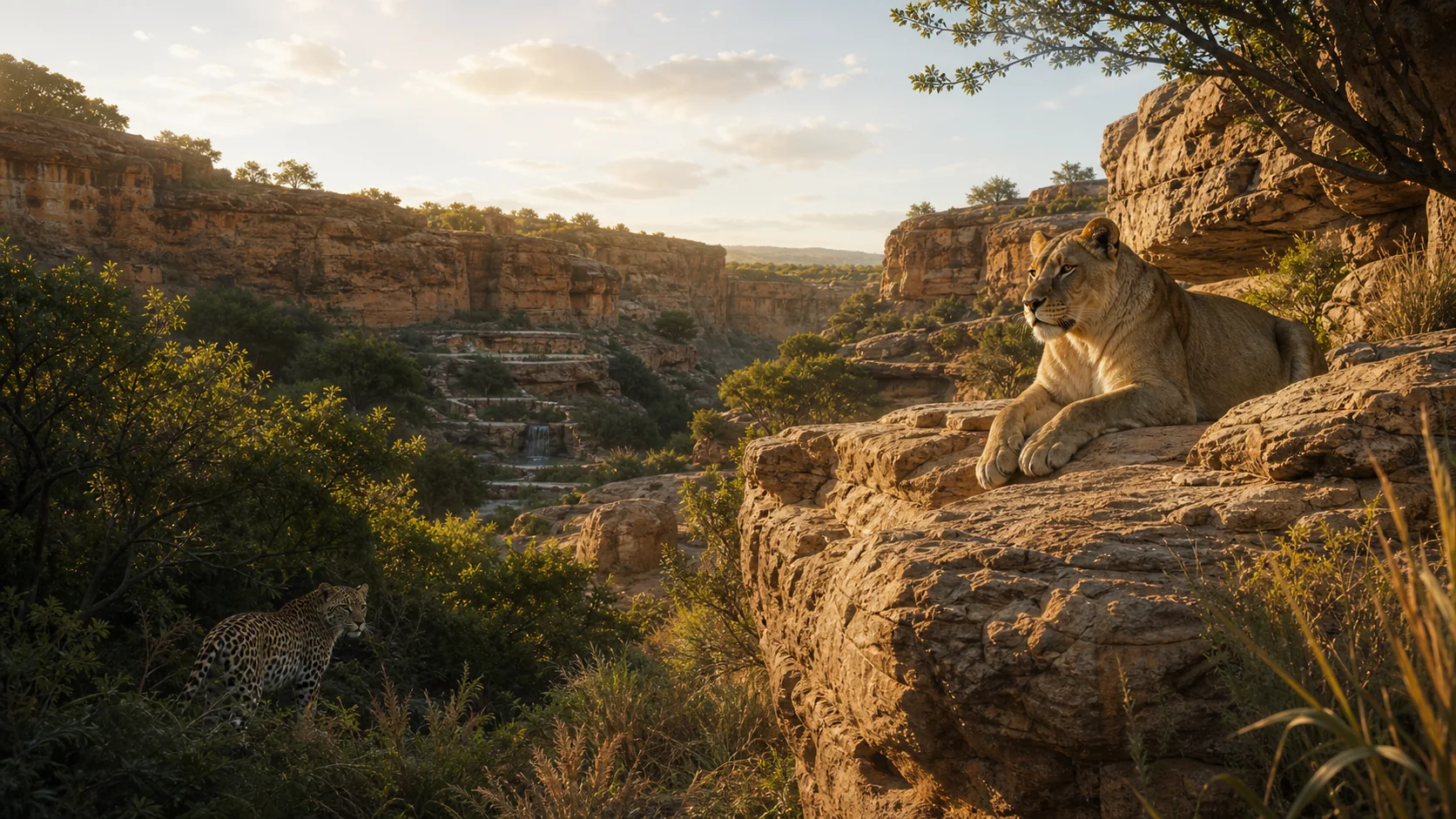
Big Cat Canyon
Powerful predators, dramatic landscapes, unforgettable encounters
Visit Big Cat Canyon